Part 3 - The Nepal You Don't Expect — Chitwan
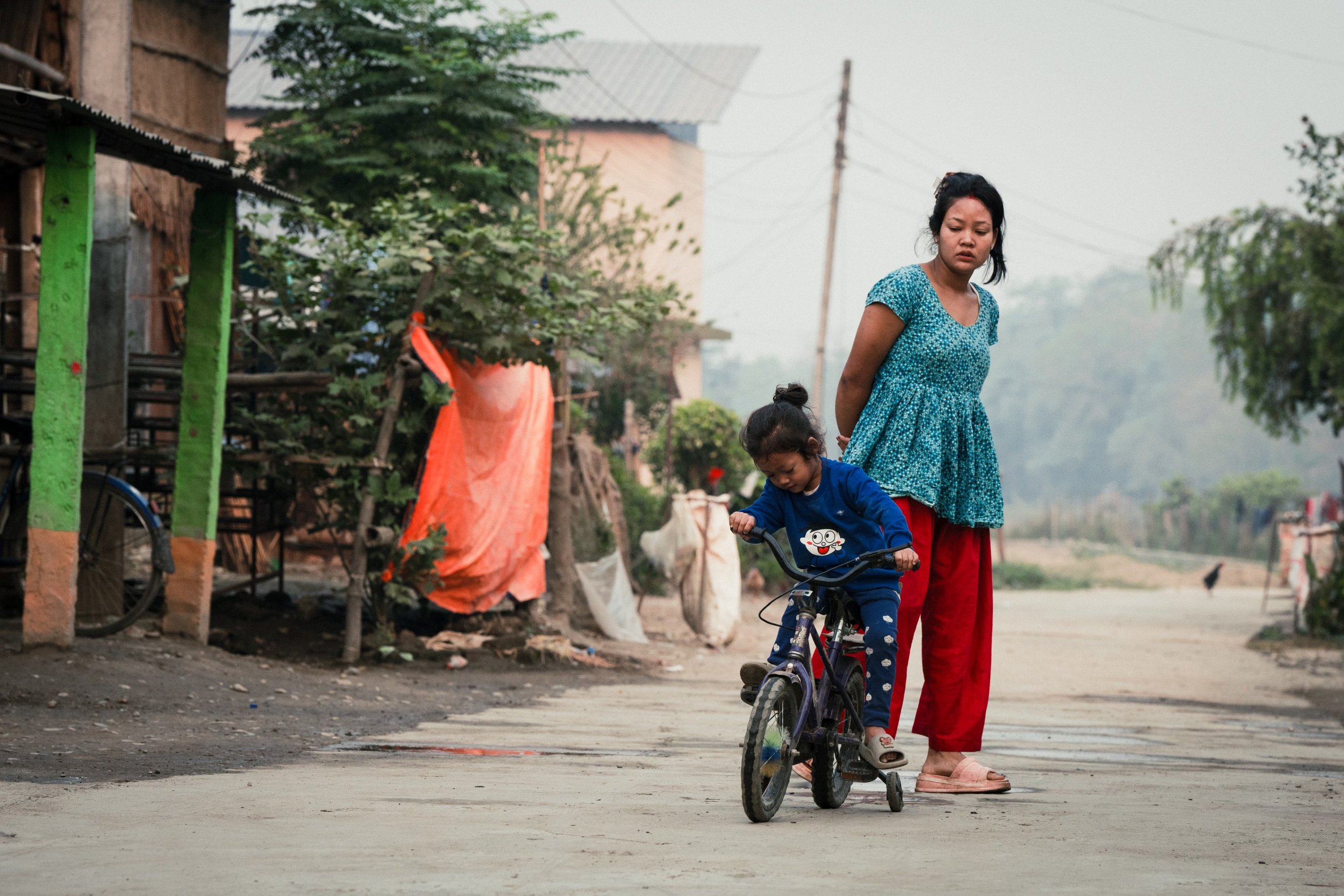
We travelled south to Chitwan, at the border with India, on the suggestion of Saroj. We had not anticipated this part of the itinerary and it turned out to be one of its finest surprises. The Tharu people inhabit this region; the Nepalese government actively supports their communities and the preservation of their way of life. We found peaceful people there, deeply connected with their environment and genuinely open to visitors willing to immerse themselves in it. The religious intensity that had shaped every day in Kathmandu was almost entirely absent here. The atmosphere was different in every way.
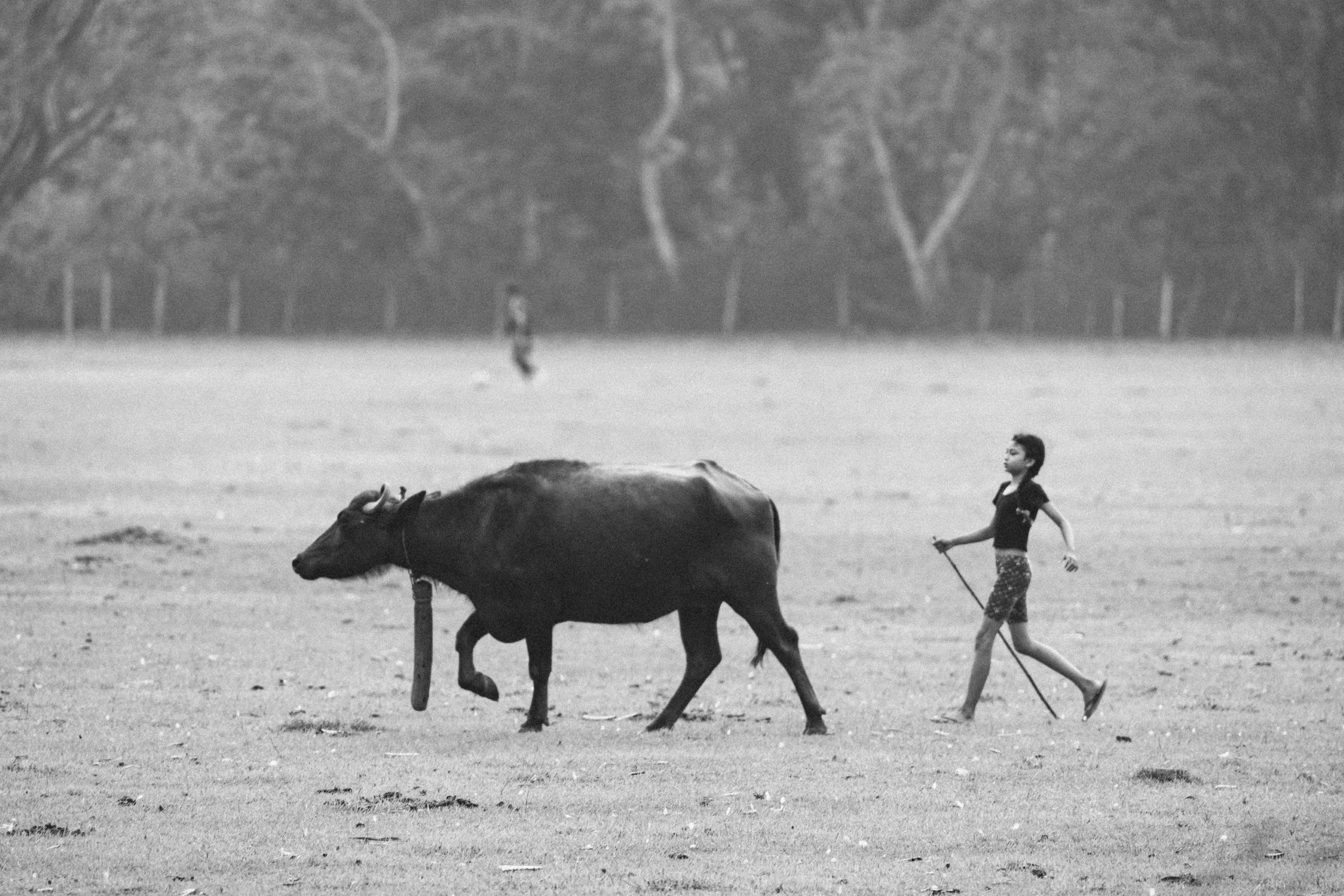
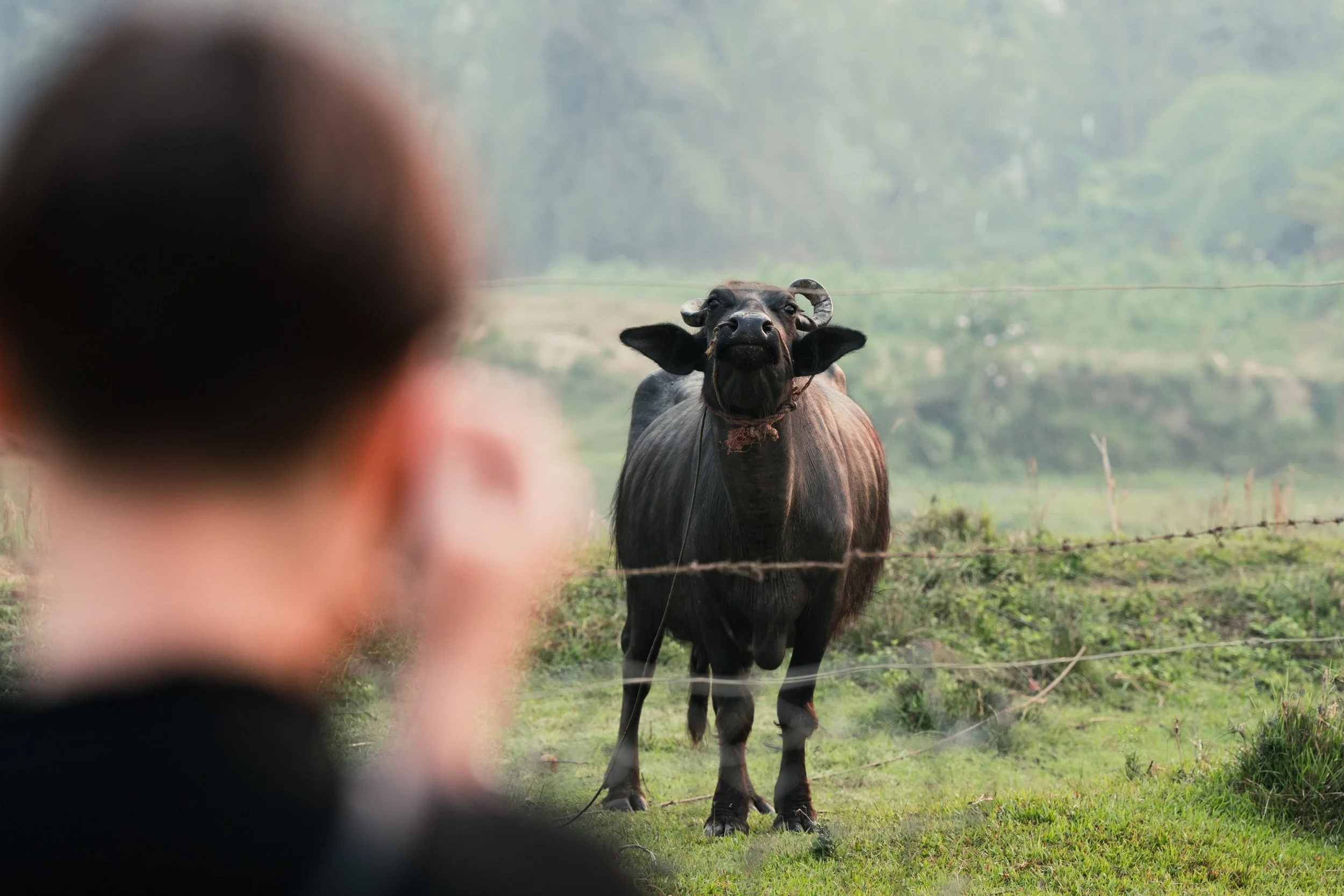
A Tharu girl leading one of her family's water buffalos stayed impressed into our eye. Those docile giants are common in Chitwan, but it takes more composure than the picture suggests: when one of them fixed its gaze on Marta and me, we concluded our business quickly and moved out of its path.
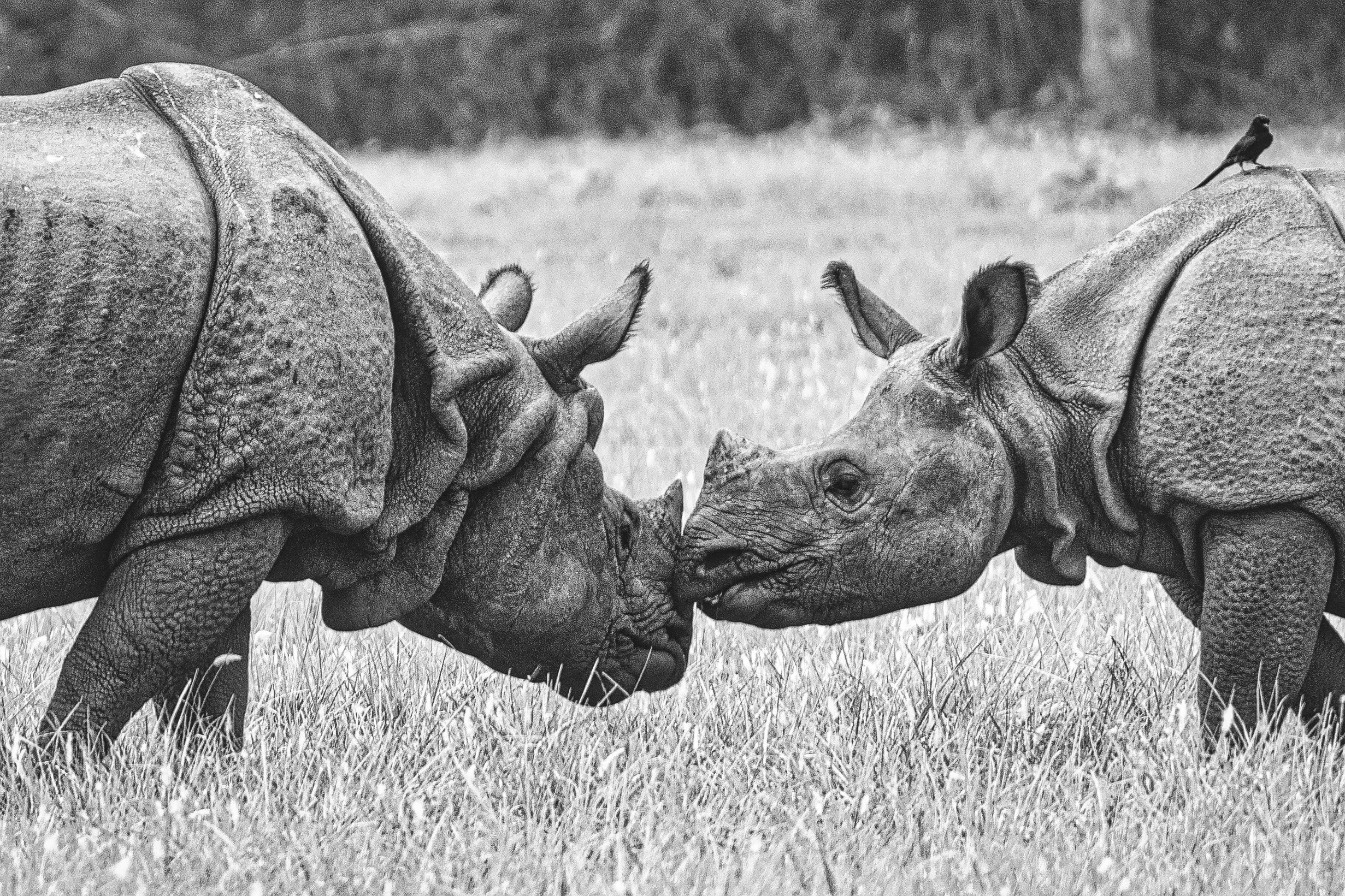
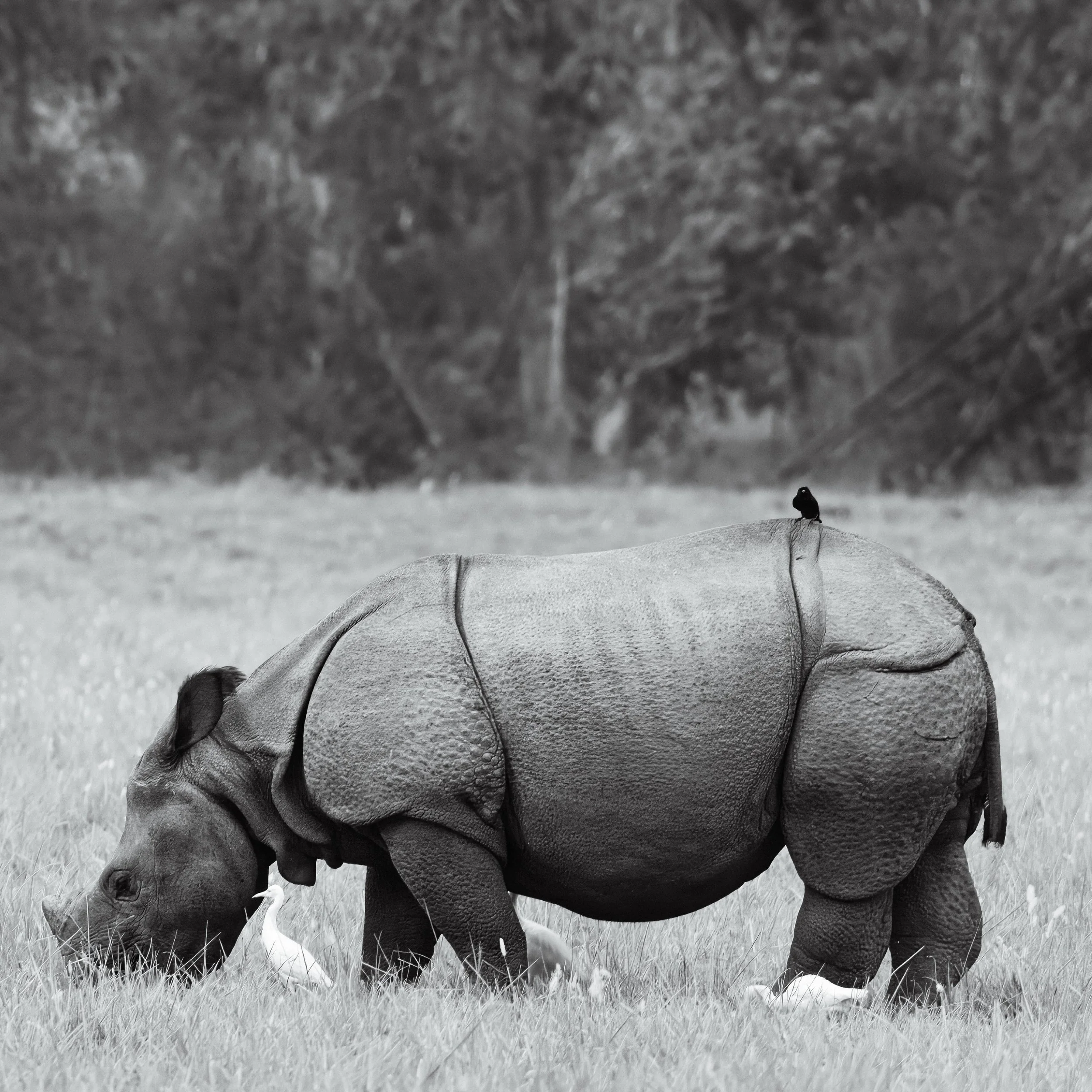
Rhinos required a different approach entirely. The images were taken with a 200mm f2.8 and a 1.4 teleconverter: a longer lens would have been useful, and the lesson was duly noted. In the final image of the series, the female appears to be nuzzling the male. Our guide remarked that the scene was not common. We prefer to think it was true love.
Chitwan is engaged in an ambitious programme to repopulate the jungle with elephants, a species that had come close to local extinction. Dominant males are left in the wild; females and younger males are protected in a dedicated centre, enabling the survival of calves and supporting reproduction. Some elephants are also domesticated and trained. Marta had a face to face encounter with one and came away with an unexpected gift in exchange for a photograph.
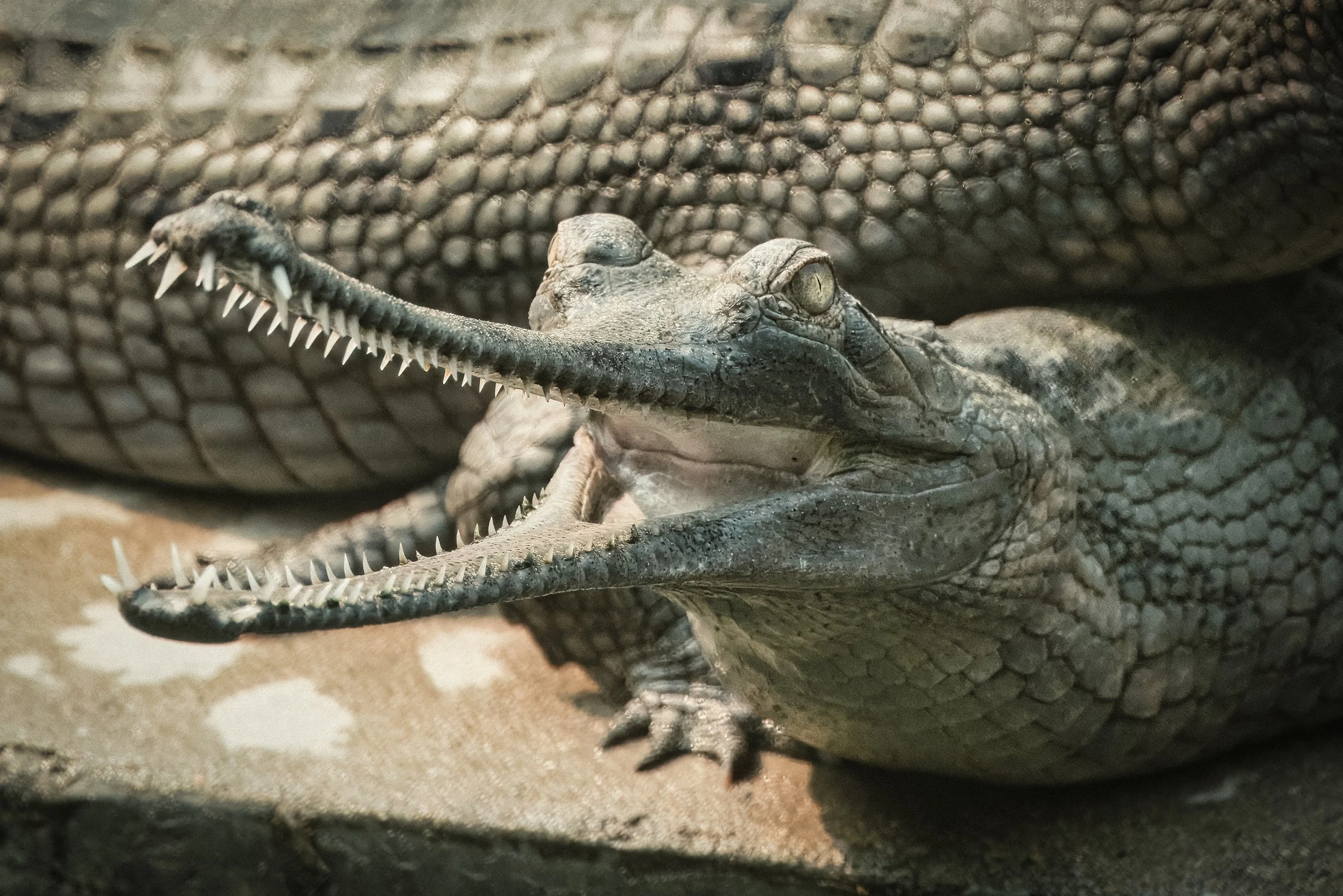
The gavial crocodiles, after four years living a few metres from the gators of the Armand Bayou in Houston, produced less adrenaline than expected. They were photogenic nonetheless.
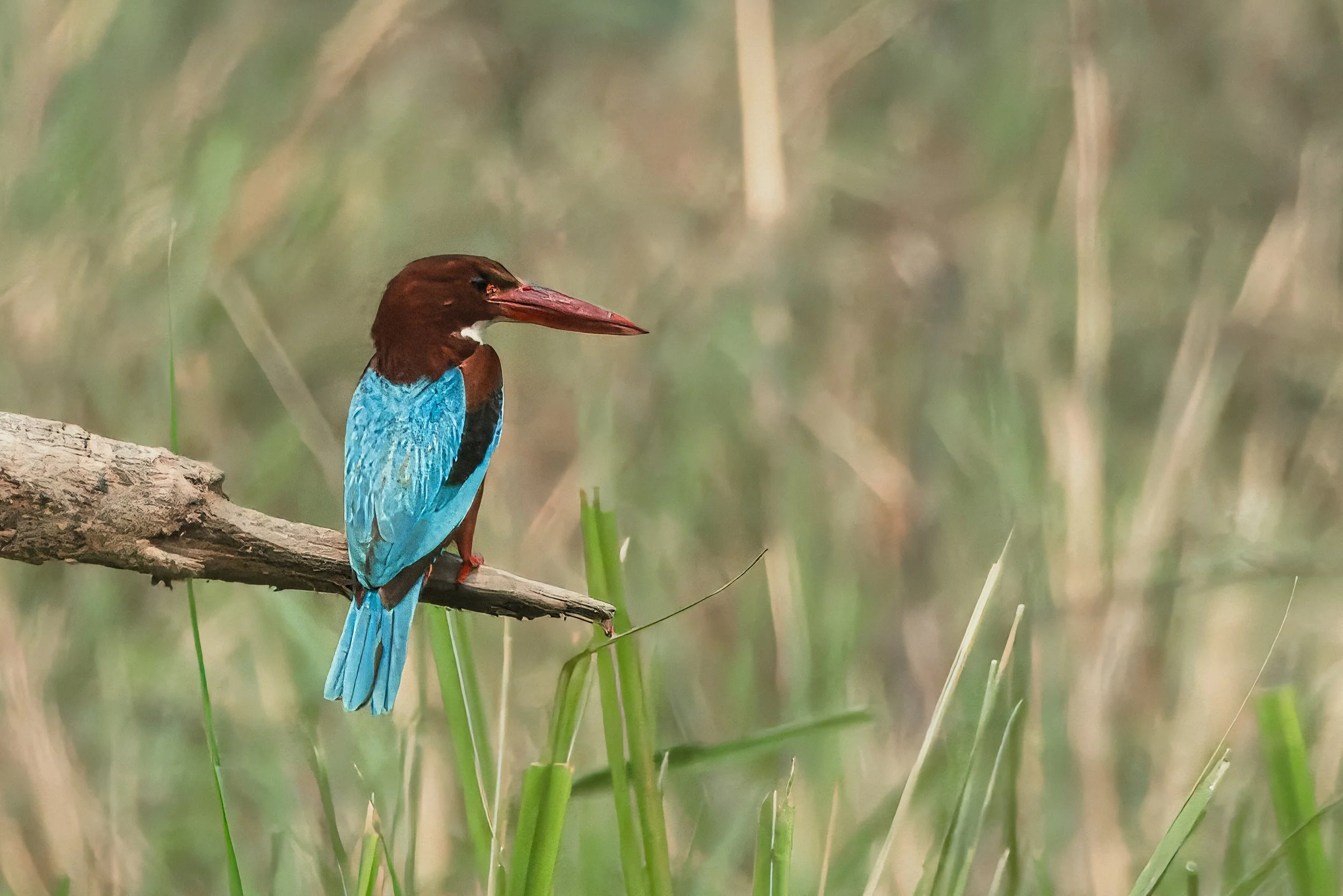
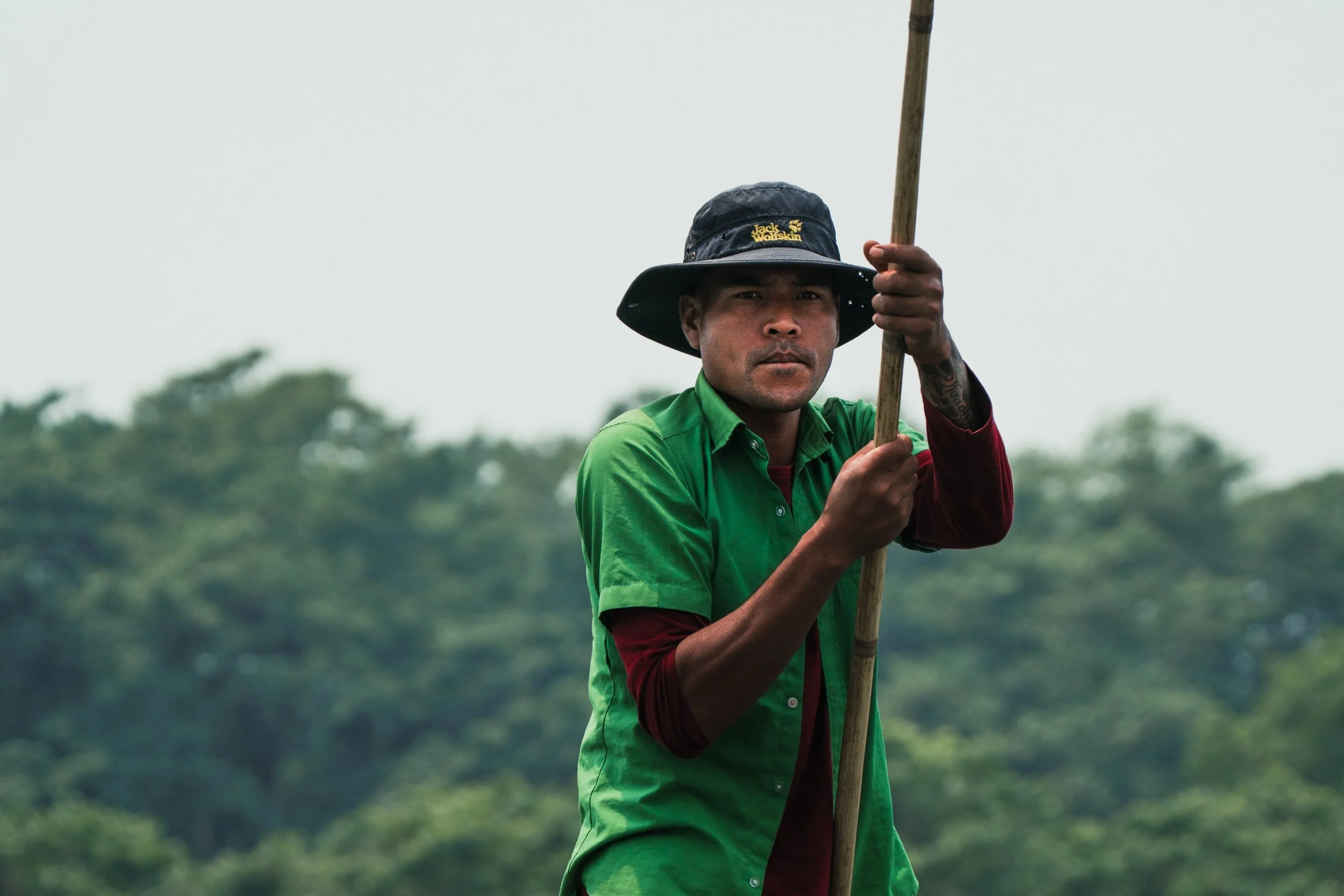
It took five minutes to convince Marta to board the canoe for the drift down the crocodile-inhabited river. It became one of the most rewarding experiences of the trip: moving in silence, listening only to the sounds of the wild, a kingfisher cutting across the water as the sun went down.
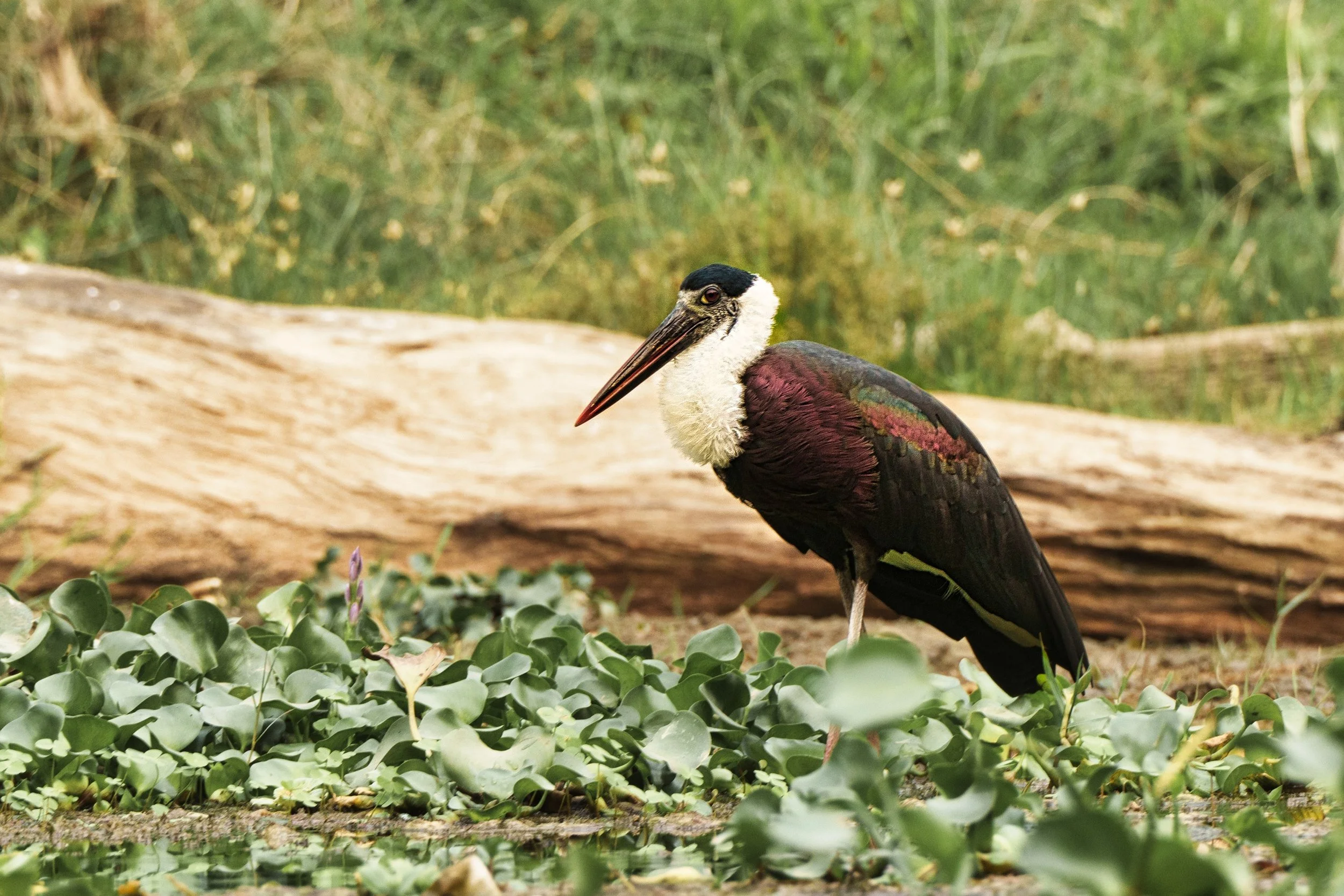
We woke at 4.30 on the last morning in Chitwan to walk through the Tharu village with our local guide. The birds alone made it worthwhile.
Nepal does not let you keep your distance. We did not try.